
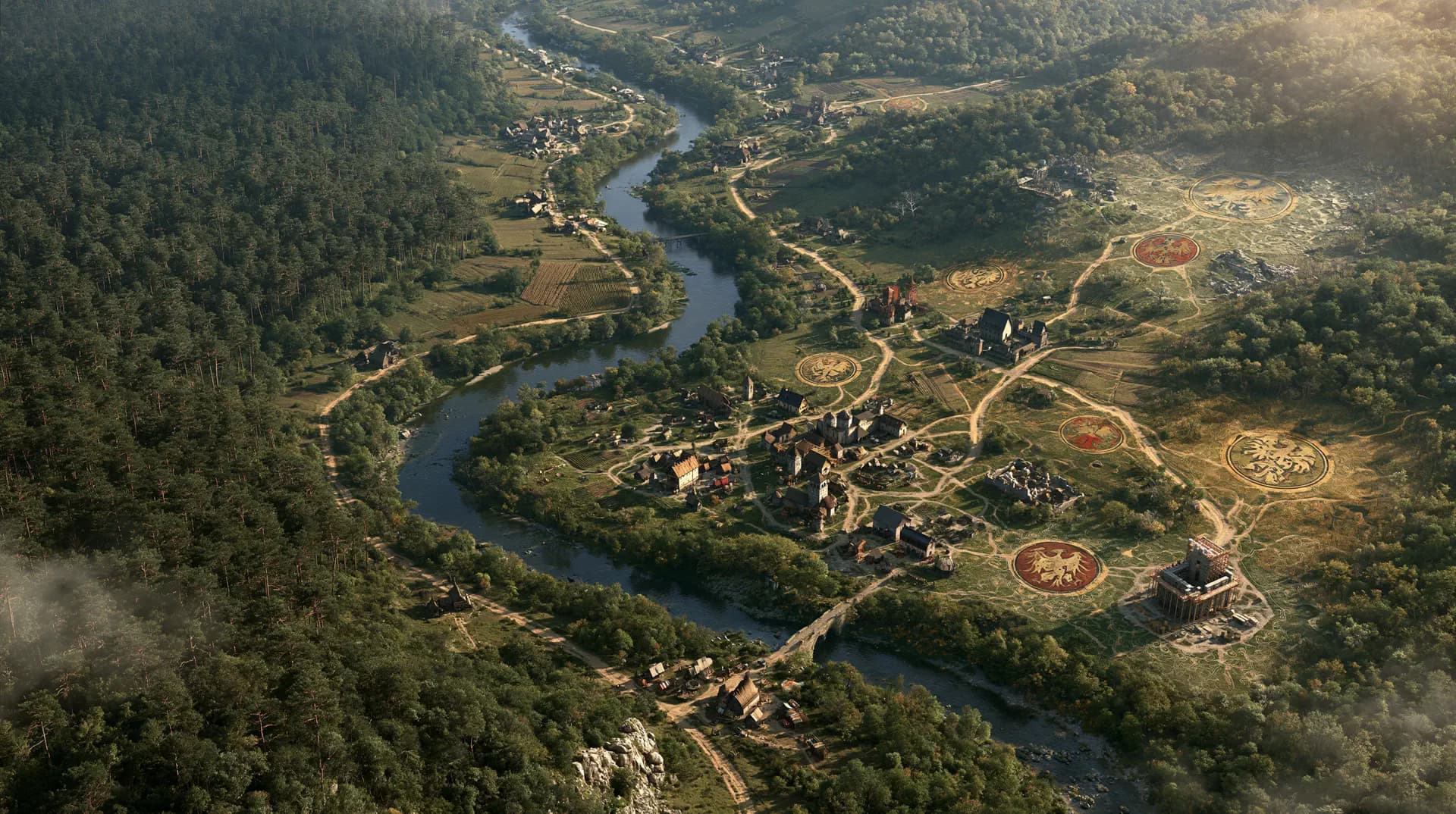
The real map remains the source of truth
Kingdoms of Earth uses real geography as the structure of its world. The production map preserves real shapes and distances, while gameplay layers translate these places into strategic opportunities.
Showcase illustrations express an art direction. They provide no coordinates, proof of location, or contractual preview of a playable territory.
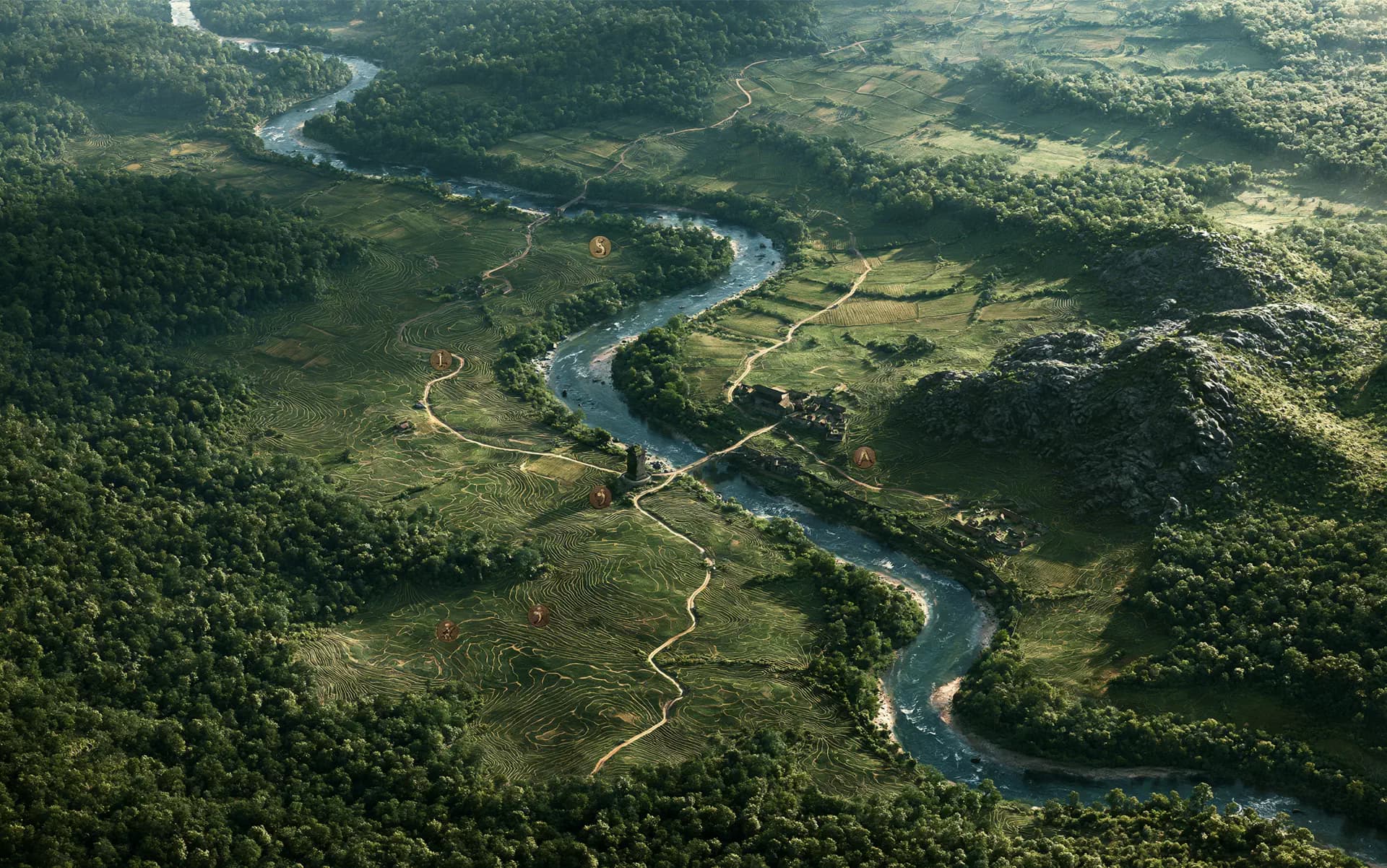
- Real geography
- Roads, terrain, coastlines, natural areas, and distances structure the production map.
- Gameplay opportunities
- Game systems add resources, activity areas, and constraints without moving the real world.
- Landmarks
- Notable places support observation and the Codex through respectful access conditions.
Territory is built over time
Territory is not awarded to the last player who passed through. Several kingdoms can build influence there, then control depends on maintaining a sufficient share over time.
This approach is intended to reward organization and continuity rather than opportunistic conquest based on being online at a precise hour.
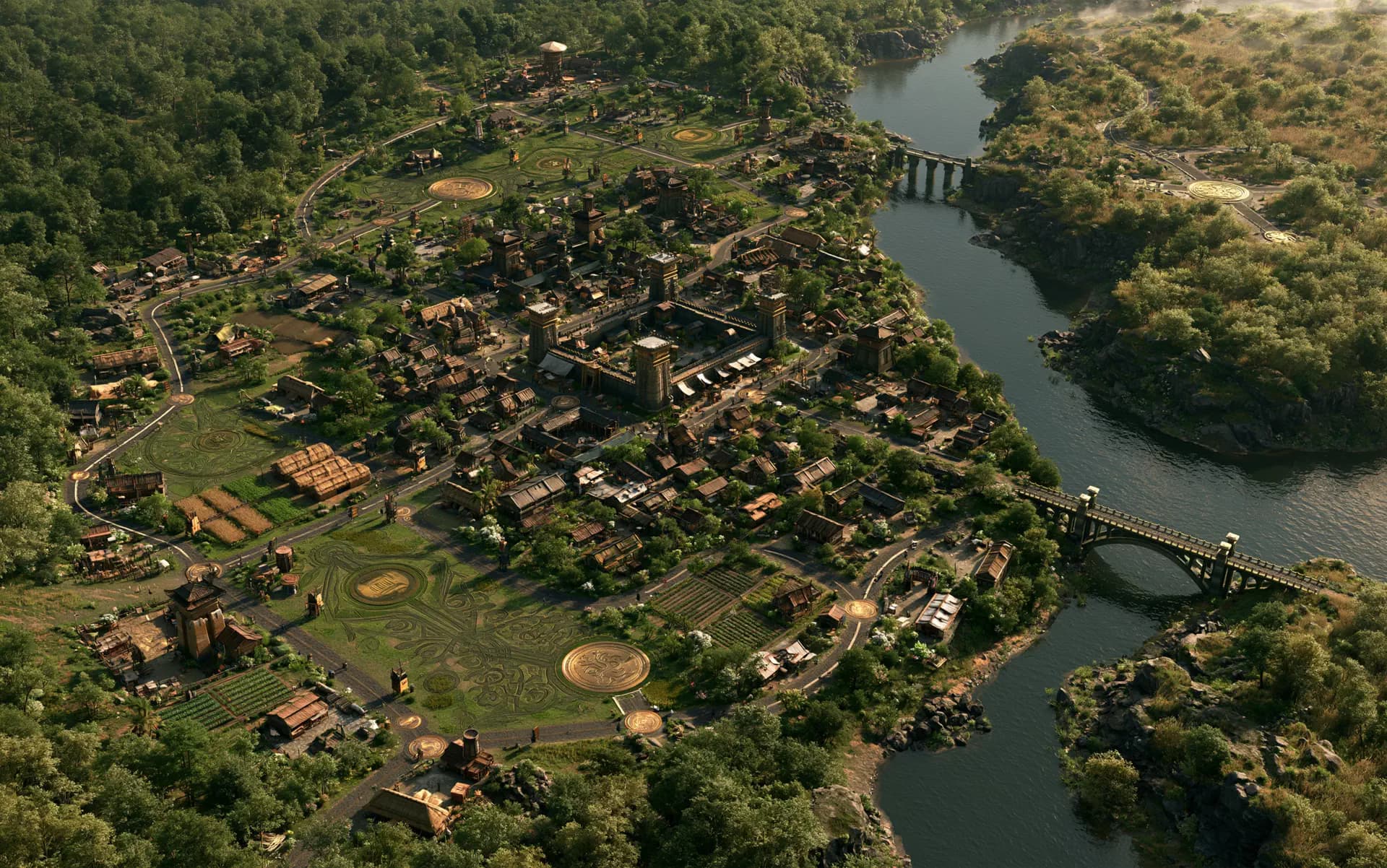
- Influence
- It grows through lasting activity and can be shared by several kingdoms.
- Inertia
- Passing through once cannot control an area, and abandoned activity gradually loses weight.
- Local identity
- Resources, members, projects, and routes give each settlement a different role.
Cooperate without obscuring decisions
A kingdom brings together players, roles, a treasury, resources, a capital, projects, and influence. Players create it instead of being assigned to a fixed faction.
The target governance should keep responsibilities clear and limit irreversible decisions made by one person. Detailed rules will evolve with testing of the collective loop.
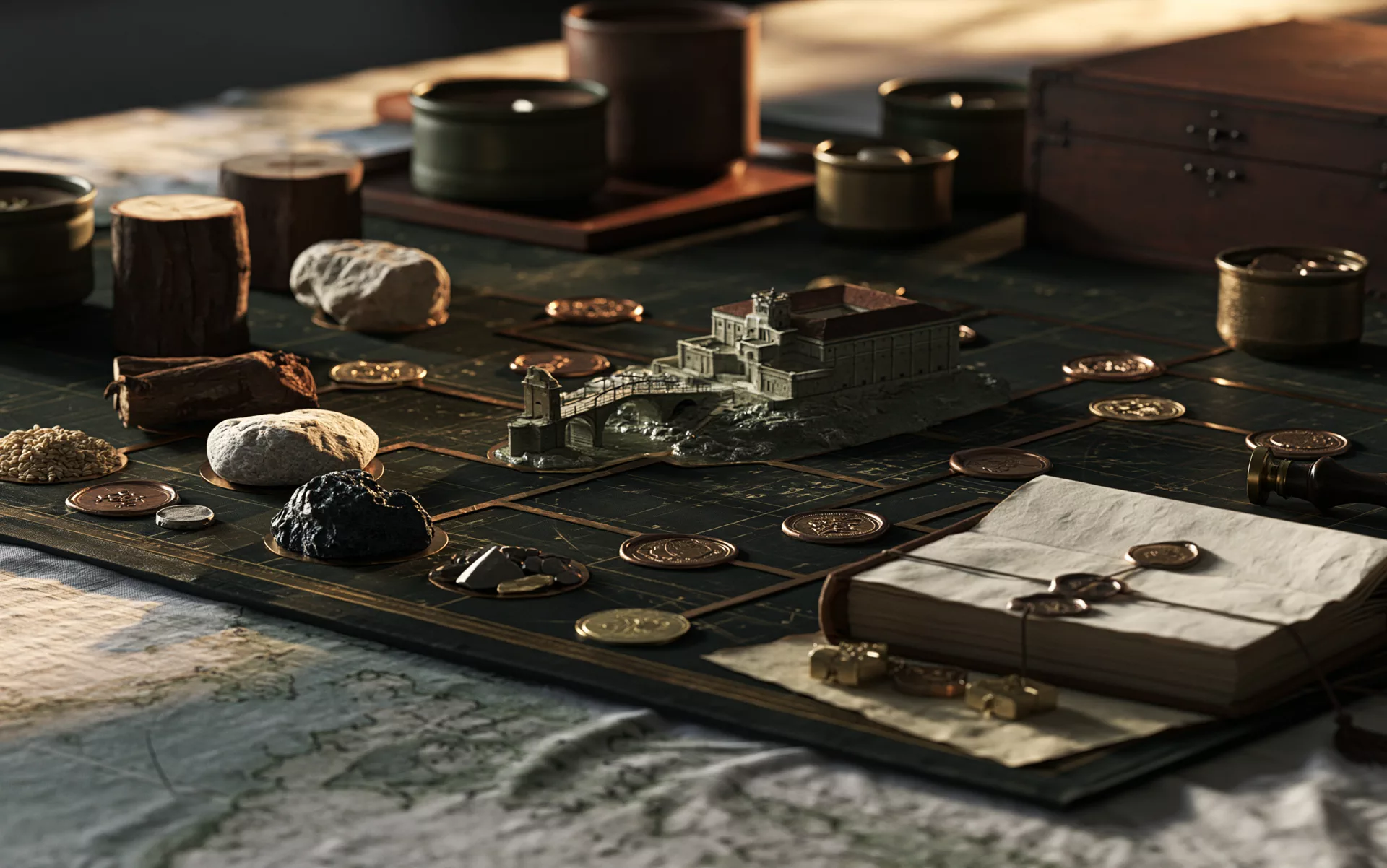
- Members and roles
- Permissions separate responsibilities without merging personal resources and the shared treasury.
- Collective projects
- Buildings and infrastructure require contributions in resources or in-game currency.
- Auditable decisions
- Important spending and actions must leave a server-side record that can be reviewed.