
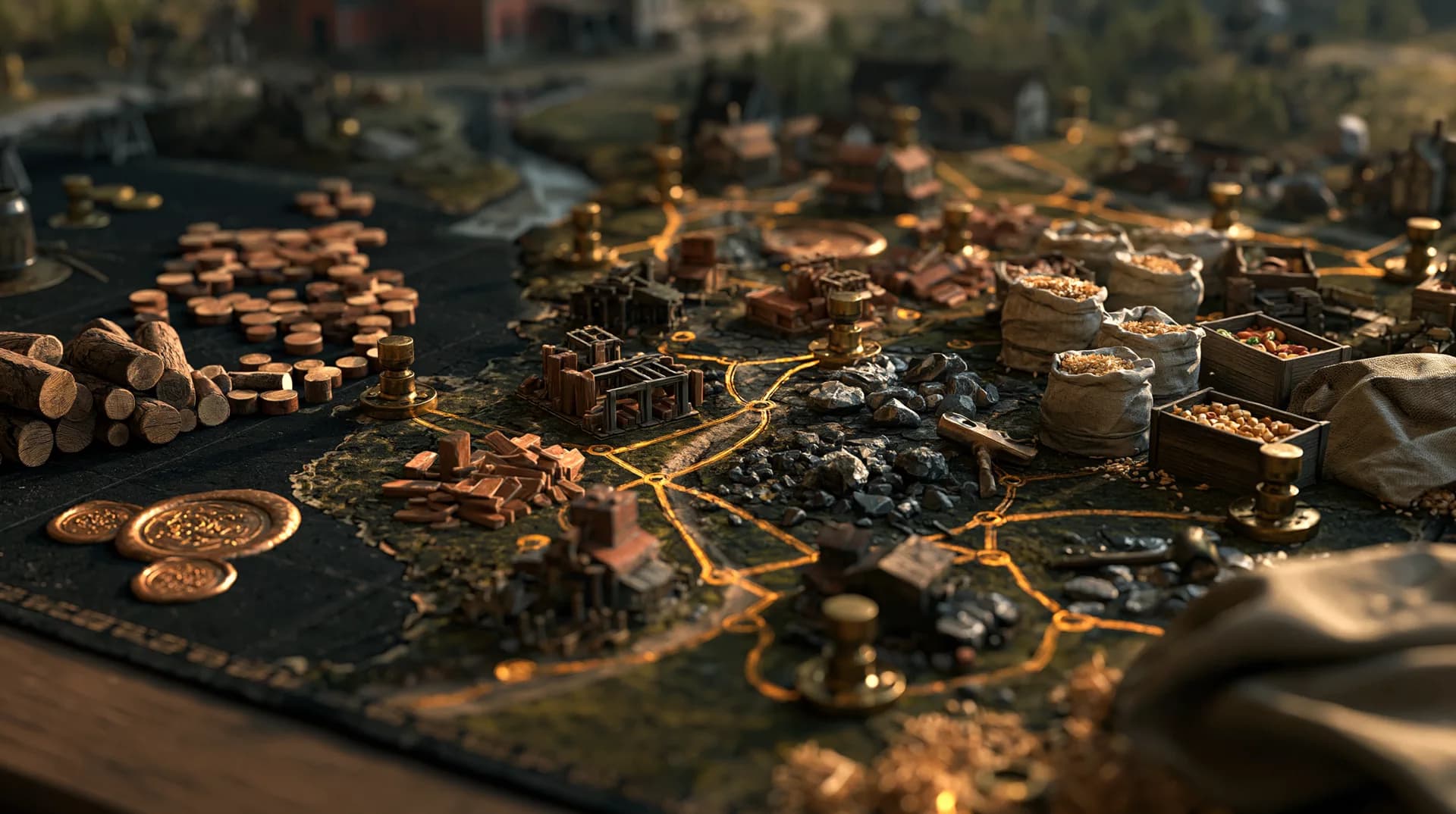
From resource to useful good
The economy connects fieldwork, professions, crafting, markets, and projects. A resource does not carry the same value everywhere because availability, transformation, and transport all require decisions.
The server preserves stocks and records important mutations. An item cannot appear twice because a screen was refreshed or an action was replayed.

- Gather
- Resources discovered in the field provide the starting point for local activity.
- Transform
- Crafting combines materials to create more useful or rarer goods.
- Produce over time
- Workers and buildings extend activity already opened by your discoveries.
- Distribute
- Storage, capacity, and routes determine where goods can be used or sold.
Complementary professions, not closed classes
Every profession is intended to remain available to the same character. Specialization comes from time, recipes, and chosen opportunities, not from an irreversible class selected at the beginning.
You can change priorities, combine several activities, or focus on a link that your territory needs.

- Producer
- Maintains a steady supply of raw materials.
- Craftsperson
- Transforms resources through recipes and profession-specific progression.
- Merchant
- Reads local needs, lists goods, and chooses prices.
- Logistician
- Balances origin, destination, delay, cost, and transport capacity.
- Investor
- Supports infrastructure and projects that serve lasting activity.
- Leader
- Coordinates resources, permissions, and collective priorities.
Why distance matters in trade
Trade should create understandable shortages, opportunities, and cooperation. Craftspeople depend on materials, merchants on supply, and collective projects on many contributions.
Final prices, taxes, and yields will be simulated and tested before real players rely on them. Current prototype values are not commercial promises.
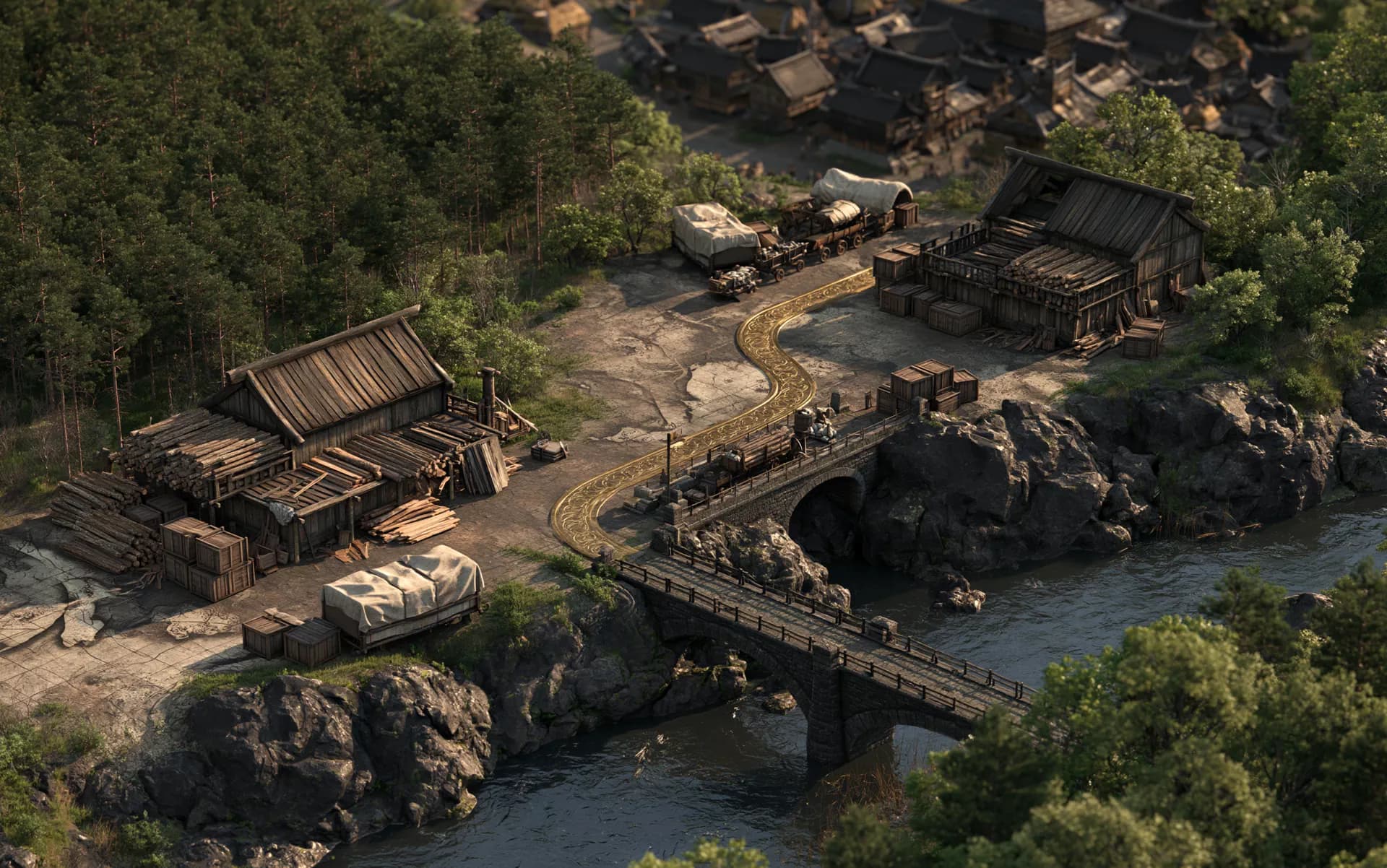
- Local markets
- A listing belongs to an area. The chosen direction has no instant global marketplace.
- Meaningful transport
- Price differences are constrained by travel time, capacity, and cost.
- Fair economy
- A real-money purchase must grant no resource, yield, or territorial influence.